
Sale
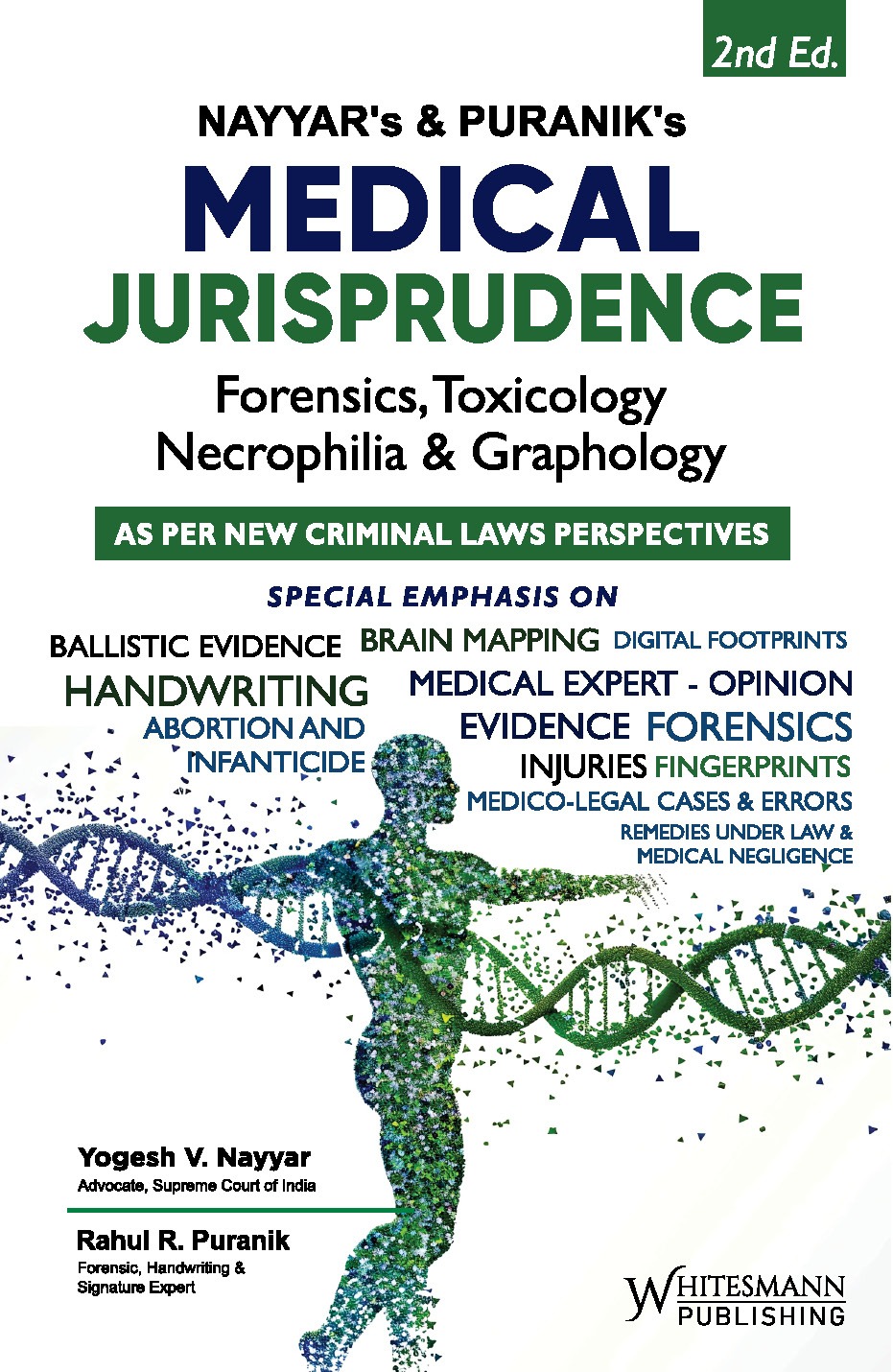
Medical Jurisprudence Forensics, Toxicology, Necrophilia & Graphology, 2nd Edition 2026-by Nayyar’s and Puranik’s
Medical Jurisprudence (Legal Medicine) applies medical knowledge to law, covering injuries, death, and expert testimony; Forensics investigates crimes using scientific methods; Toxicology analyzes poisons/drugs in the body; Necrophilia is sexual attraction to corpses (often a forensic/psychological issue); and Graphology is analyzing handwriting to assess personality or authenticity, often used in forgery cases, with these fields intersecting in legal investigations.
Here’s a breakdown of each:
- Medical Jurisprudence (Legal Medicine): The application of medical science to legal questions, involving understanding injuries, determining cause of death (autopsies), and providing expert medical evidence in court.
- Forensic Science: The broad field of applying scientific methods (like DNA, ballistics, trace evidence) to criminal investigations and legal proceedings.
- Toxicology: The study of poisons, drugs, and other chemicals in the body, determining their effects, presence, and concentration, crucial in poisoning cases and drug-related deaths.
- Necrophilia: A paraphilia involving sexual attraction to corpses; its study falls under forensic psychology and psychiatry when it relates to crimes, involving the study of the perpetrator’s mind.
- Graphology (Forensic Handwriting Analysis): Analyzing handwriting to identify the writer or detect forgeries, used in cases of blackmail, fraud, or disputed documents, linking to human psychology and tendencies.
| Binding | Hardbond |
|---|---|
| Laguage | English |
| Publisher | WHITESMANN PUBLISHING |
| Publishing Year | 2026 |
| Edition | 2nd Edition |
Medical Jurisprudence Forensics, Toxicology, Necrophilia & Graphology, 2nd Edition 2026-by Nayyar’s and Puranik’s
Original price was: ₹3,995.₹2,996Current price is: ₹2,996.
Estimated delivery3 - 8 days
[etheme_sales_booster_safe_checkout]
Medical Jurisprudence Forensic...
Original price was: ₹3,995.₹2,996Current price is: ₹2,996.