
Sale
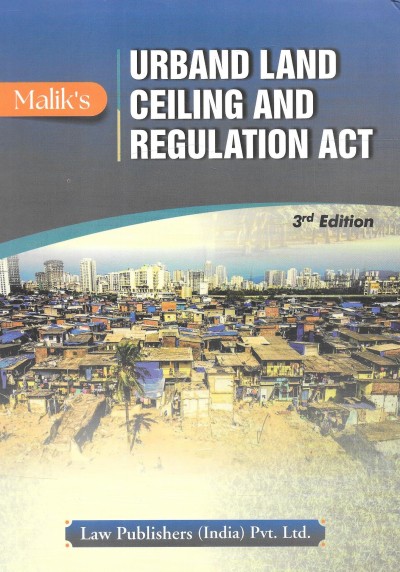
The Urban Land (Ceiling and Regulation) Act (ULCRA) of 1976 was an Indian law to cap ownership of vacant urban land, aiming to curb speculation, prevent land concentration, and enable equitable distribution for public and low-income housing, but it faced issues like legal delays, boosting black markets, and didn’t meet goals, leading to its repeal in 1999 by the Centre, though some states still had it active until recently.
Key Aspects of the 1976 Act
- Objective: Prevent land speculation and control rising prices in urban areas.
- Ceiling: Imposed limits on vacant land a person or family could own in urban agglomerations.
- Acquisition: State governments could acquire excess land (surplus land).
- Regulation: Regulated building construction on such land.
- Categorization: Urban areas were categorized (A, B, C) based on population for ceiling limits.
| Binding | Hardbond |
|---|---|
| Laguage | English |
| Publisher | LAW PUBLISHERS (INDIA) PVT LTD |
| Publishing Year | 2025 |
| Edition | 3rd Ed. |
Urban Land Ceiling and Regulation Act,3rd Edition 2025-by Justice S Malik
Original price was: ₹3,795.₹2,846Current price is: ₹2,846.
Estimated delivery3 - 8 days
[etheme_sales_booster_safe_checkout]
Related products







 Urban Land Ceiling and Regulat...
Original price was: ₹3,795.₹2,846Current price is: ₹2,846.